We compare efficiency, degradation rates, cost per watt, and real-world performance data from 40 installations across Gujarat.
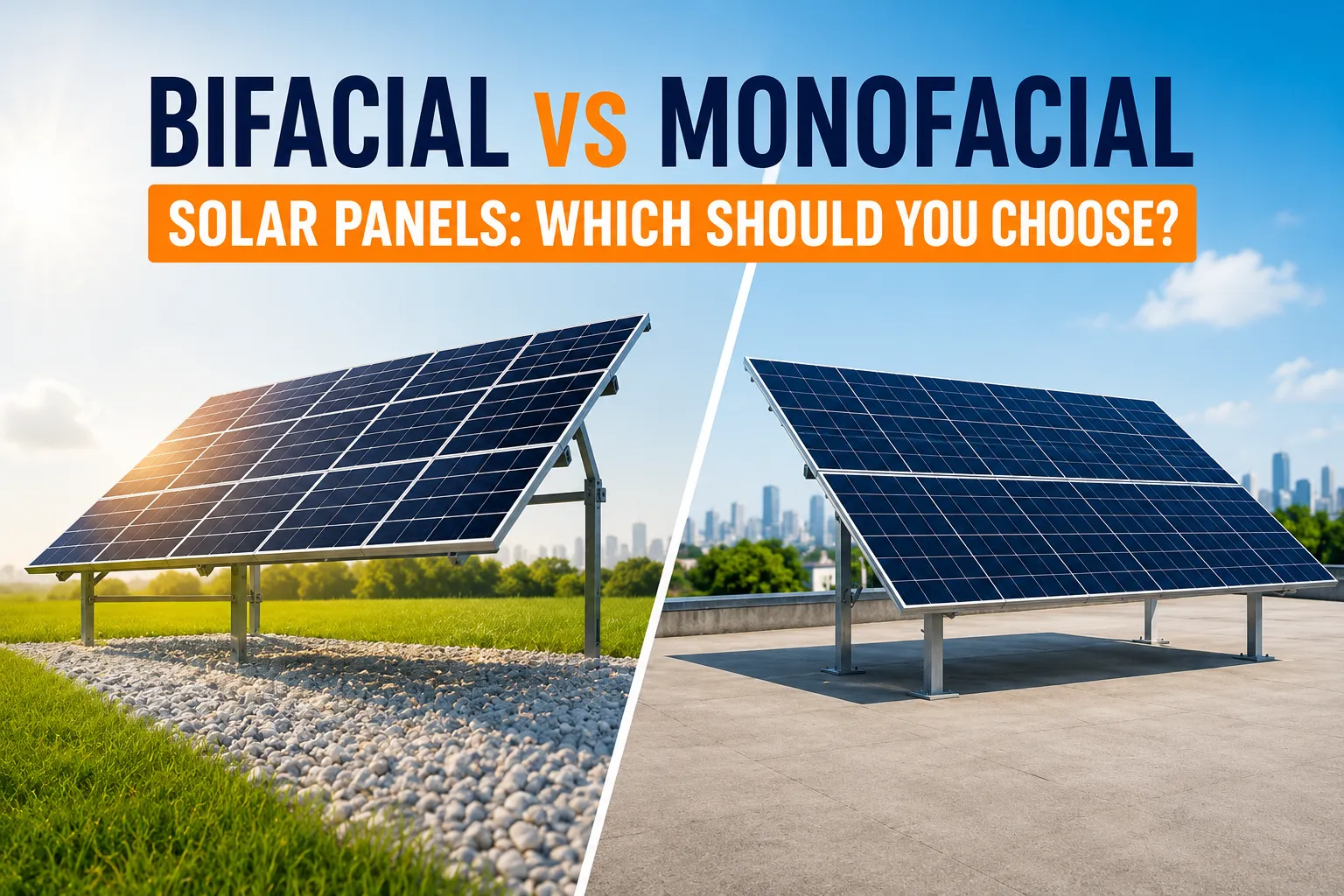
Bifacial solar panels generate power from both their front and rear surfaces, capturing reflected sunlight off surfaces like rooftops or the ground. Monofacial panels, in contrast, only use the front surface. Bifacials are gaining market share in India, but is the higher price justified?
Bifacial = front + rear generation; Monofacial = only front
Bifacial modules use a transparent backsheet or dual-glass structure, allowing sunlight reaching the rear side to be converted into electricity. This setup is best leveraged when installed on reflective ('albedo-rich') surfaces like white paint, tiles, or sand, or at elevated ground-clearance compared to flush roof-mounts.
Rear-side gains depend on the reflectivity (albedo) of ground/roof
Lab results show bifacial panels offer up to 11–18% extra yield under optimal conditions, but real-world gains in Gujarat rooftop sites average 7–12% due to variable albedo and mounting height. Monofacial perform very close to rated output in controlled orientation.
Real-world Indian rooftop bifacial gain: usually 7–12%
Both bifacial and monofacial use the same cell technologies (PERC, TOPCon, HJT), so annual performance loss rates are similar: ~0.5%/year. Bifacial glass-glass models, however, show better long-term reliability and resistance to microcracks/UV. Monofacial with polymer backing are lighter but less tough.
Bifacial (glass-glass) last longer, but are heavier
In 2025, bifacial modules cost ₹2.4–2.8/watt (factory gate), while monofacials are ₹2.2–2.5/watt. For small home rooftops (where rear gain is limited), the cost premium may not pay back. However, on elevated commercial sheds or near-white surfaces, bifacial can recover the premium in 2–3 years.
Bifacial costs ~₹0.20–0.30/w higher; payback in 2–3 years if used well
Choose bifacial for ground mounts, raised tin sheds or new rooftops with white tiles/paint, and monofacial for typical flat concrete terraces with less reflectivity and shade. Typical ROI is 3.9–6 years (bifacial) and 4.2–6.5 years (monofacial) for Gujarat installations.
Raised, ‘white’ or open sites → better bifacial returns
40 rooftop systems tracked across Gujarat in 2024 found bifacial outperformed monofacial by 8.7% on average when installed on white-painted sheds 2m above the floor. O&M costs were similar. On concrete with no albedo, gains dropped to 3%. Choose panel type for your exact mounting scenario.
White roofs: bifacial gain 8.7%; concrete: only ~3% gain
Monofacial remains the best value for standard terraces, but bifacial unlocks powerful extra yield on reflective or elevated sites. Always evaluate both module price and your actual roof conditions before choosing.
Match panel type to your site, not just price or datasheet
Writing since 2022
Arjun leads our solar engineering team with 9 years of field experience across residential, commercial, and industrial installations in Gujarat and Maharashtra. He specialises in system performance optimisation and MNRE compliance.